
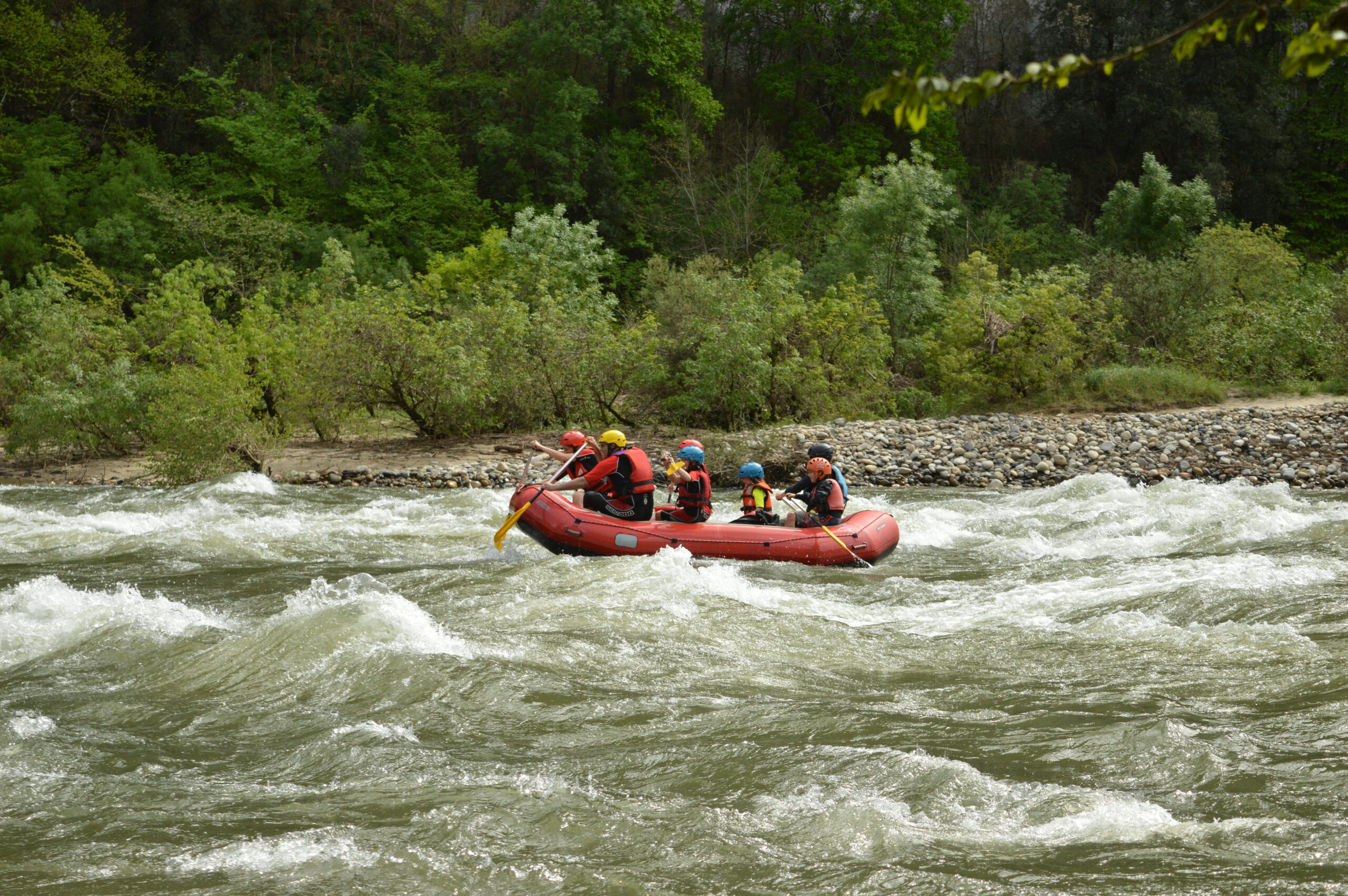
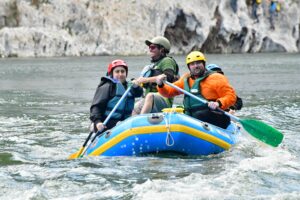
Our beautiful river is ideal for all kinds of water activities, with its spectacular scenery and thrilling rapids.
Rafting is not without regulations. In fact, the legislation concerning rafting on the Ardèche is closely linked to water levels, and it is crucial to understand why certain restrictions are in place.
The importance of water levels
Before going into the details of the legislation, it is essential to understand how water levels influence the safety and feasibility of rafting. The Ardèche is a river that experiences significant variations in its flow throughout the year, depending on the seasons and weather conditions. During periods of high water, water levels can become dangerous, making rafting not only difficult but also risky for participants. Conversely, during periods of low flow, the river may be too shallow, making navigation difficult and potentially damaging boats.
We obtain information from the official government website https://www.vigicrues.gouv.fr/station/V505401001
Current legislation
Rafting regulations on the Ardèche are enforced by various authorities, including local authorities and security services.
These regulations aim to protect both participants and the environment. In general, legislation stipulates that rafting is only permitted when water levels are within a safe range.
To ensure the safety of participants, measures are put in place, such as the installation of beacons and water level measuring stations. These devices allow real-time monitoring of river conditions and provide information on current water levels. When levels exceed certain thresholds, access to the river may be temporarily prohibited.
Rafting is permitted when rental is prohibited.
This activity may only be undertaken with a guide and/or by experienced individuals.
Why are these restrictions necessary?
-
Safety of participants: Safety is the top priority of any regulation. During periods of high water, the force of the current increases considerably, making rafting dangerous even for experienced participants. Rapids can become unpredictable, and the risk of capsizing or injury increases exponentially.
-
Environmental protection: The Ardèche is a sensitive river, home to a rich and varied biodiversity. During heavy floods, erosion of the banks can accelerate, destroying natural habitats. In addition, human activities in these conditions can disrupt the river’s fragile ecosystem.
-
Preserving the experience: When water levels are too low, rafting can become an unpleasant experience, with slow sections and the risk of boats getting stuck. By regulating access to the river, the authorities ensure that participants enjoy the best possible experience.
Equipment
- We provide all the necessary equipment, life jackets, helmets and paddles, as well as a neoprene wetsuit. It is important to wear suitable clothing, such as a swimsuit, and water shoes or trainers are mandatory.
Rafting on the Ardèche is an exhilarating activity, but it must be practised safely. Restrictions based on water levels are essential to protect both participants and the environment. By informing yourself and choosing to practise this activity responsibly, you will help preserve the beauty of this river while enjoying unforgettable moments. Contact us to find out what’s possible. Together, we’ll see what’s available: canoeing, canyoning, rafting…

