
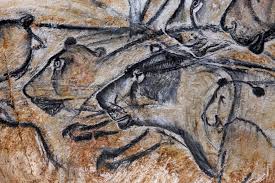
drawing from the Chauvet Cave frescoes
The Chauvet Cave
A Journey to the Heart of Prehistoric History
The Chauvet Cave, located in the Ardèche department of France, is one of the most important and fascinating prehistoric sites in the world. Discovered in 1994 by three speleologists, Jean-Marie Chauvet, Éliette and Christian Hilaire, this cave contains treasures of rock art dating back more than 36,000 years. While Chauvet Cave has made its mark on the history of archaeology, it has also redefined our view of art and the lives of early humans.
An Exceptional Discovery
The Chauvet Cave owes its name to one of its discoverers, Jean-Marie Chauvet. After exploring it in 1994, researchers realised that it was a veritable ‘Ali Baba’s cave’ from an archaeological point of view. Not only does the cave contain exceptional wall paintings, it is also exceptionally well preserved. Its walls are covered with drawings and paintings depicting an impressive variety of animals, including cave lions, woolly rhinoceroses, horses and bison.
The works found in the Chauvet Cave are of great beauty and unprecedented rarity, offering a visual testimony to the daily lives of our ancestors. These drawings bear witness to the complexity of their perception of the world and their artistic mastery. The techniques used, such as charcoal painting and engraving, as well as the very realistic representation of animals, demonstrate a skill and understanding of the natural world that was previously unsuspected.
Cave Paintings: A Revolutionary Art Form
What sets the Chauvet Cave apart from other prehistoric sites is the quality and diversity of its cave paintings. The artists of the time were able to depict animals with astonishing realism, some of which seem almost ‘alive’ thanks to the use of relief and texture. These works reveal complex techniques, such as the use of perspective, demonstrating an advanced understanding of artistic representation. In addition to the drawings on the walls, the cave also contains animal footprints, negative hand paintings and traces of passage, providing a better understanding of how humans and animals interacted in this environment.
The paintings are often interpreted as rituals or means of communicating with the spiritual world. Some theories suggest that these works had a shamanic role, aimed at strengthening the bonds between man and nature or ensuring a successful hunt. It is fascinating to see how these early artists had such a deep understanding of the world around them, through observing animal behaviour and representing it in a style that combines abstraction and realism.
An Exceptionally Well-Preserved Prehistoric Site
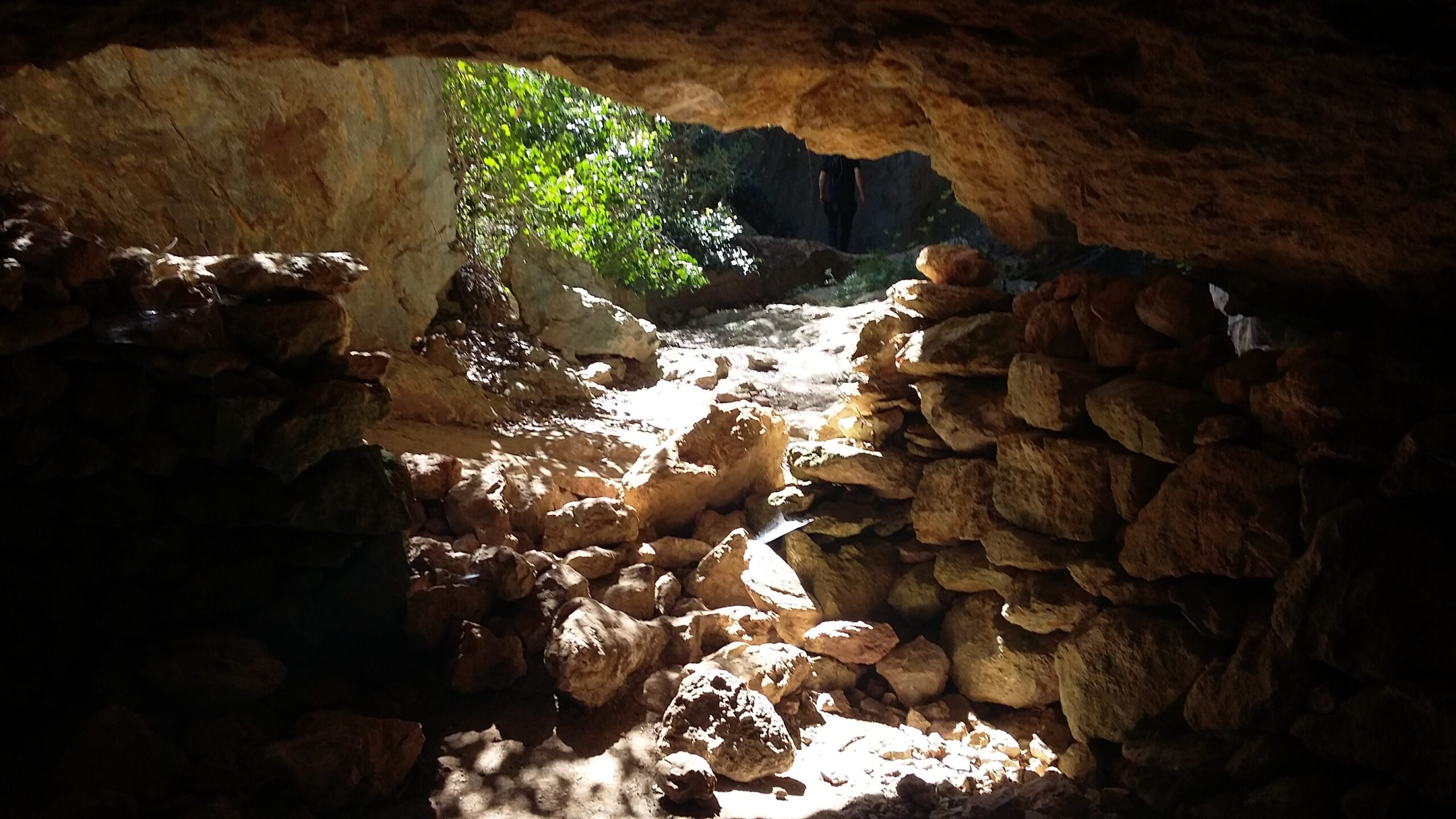
The Chauvet Cave is unique in that it has remained sheltered from the ravages of time for millennia, thanks to its narrow entrance, which has protected it from human alteration. It was only opened at the end of the 20th century, allowing scientists to study the cave in its original state. This preservation is an incredible opportunity, as it allows us to discover cave paintings in their primitive state, far from sites that are often damaged by human visits or natural conditions.
The cave itself is closed to the public to ensure its protection, but a faithful replica, the Caverne du Pont d’Arc, was opened nearby in 2015. This replica allows visitors to discover the art and mysteries of the Chauvet Cave while preserving the integrity of the original site. The Caverne du Pont d’Arc faithfully reproduces the cave’s paintings and sculptures using highly advanced reproduction techniques, offering an immersive experience without compromising the authenticity of the original site.
Reflections on Prehistoric Man
The Chauvet Cave invites us to reflect on the origins of humanity and the place of art in human evolution. By confronting these ancient works, we can perceive the intelligence and creativity of early humans, who knew how to use the natural resources at their disposal to express their beliefs and observations of the world. These works bear witness to the birth of a form of communication and culture, long before the advent of writing.
The Chauvet Cave is also a key site for understanding the transition between prehistoric societies and early human civilisations. These paintings show a world that was not simply focused on survival, but also incorporated spiritual and artistic dimensions. This window into the past invites us to rethink our own relationship with art, nature and beliefs.
The Chauvet Cave is an exceptional World Heritage Site, a silent but eloquent testimony to the complexity and depth of human thought at a time when humans were beginning to forge their identity. By exploring this site, we delve into the very roots of human art and culture, while discovering how our ancestors perceived and represented their world. A true masterpiece of rock art, the Chauvet Cave is a place that speaks to us across time, a place that continues to amaze researchers and visitors from all over the world. https://www.grottechauvet2ardeche.com/
Come and discover a piece of this history alongside our guides certified by the nature reserve.

